Removals CRM software that helps you stop leads going cold
Track every enquiry, follow up on time and keep quoting, payment and booking context in one workflow instead of losing it across inboxes and chat apps.
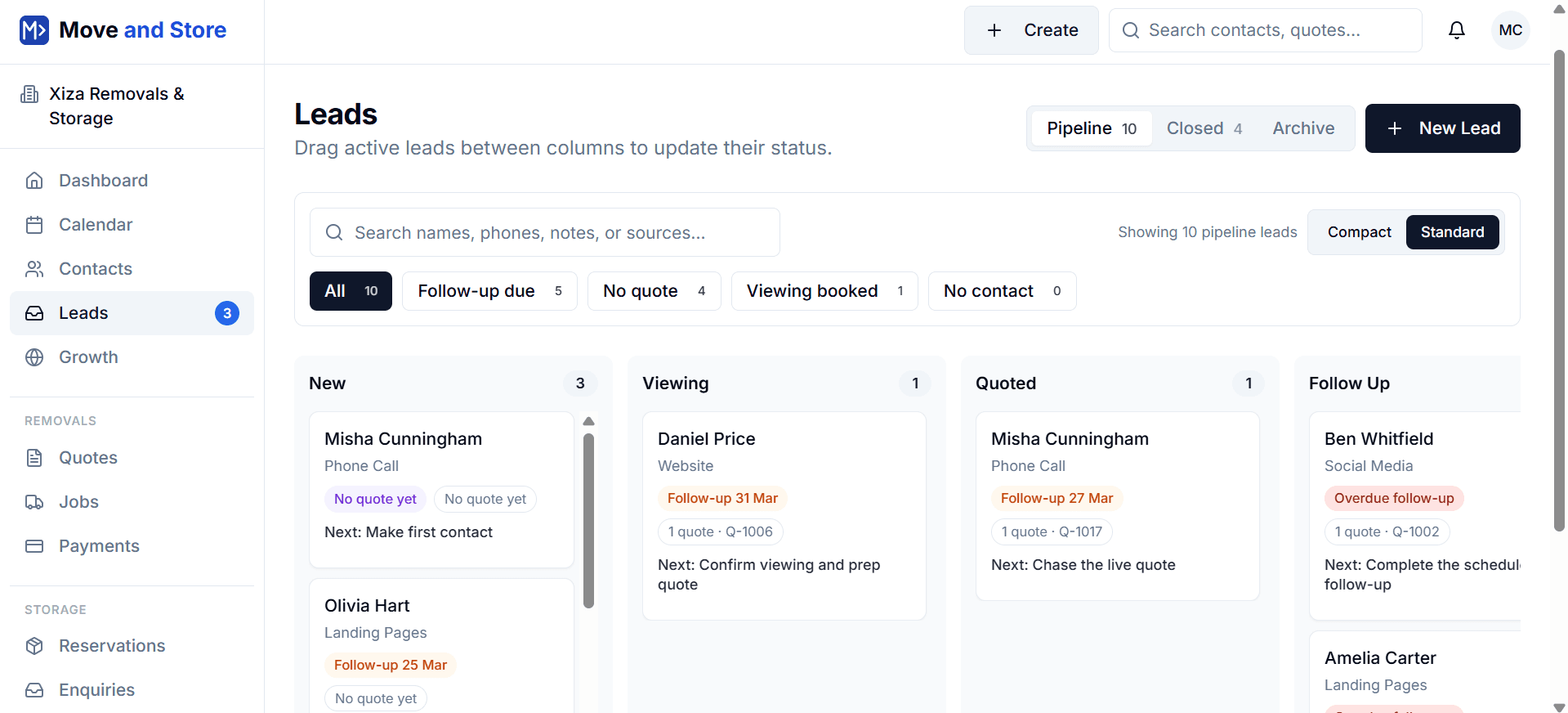
Lead management in context
The CRM works best when the whole commercial picture stays visible: who enquired, who needs a follow-up, what has been quoted, and what is already moving towards a booking.
Why disorganised follow-up costs removals companies work
Most leads are not lost because the business had no chance. They are lost because nobody could see what needed following up, when it needed doing, or what had already been promised to the customer.
Leads live across calls, forms, Messenger threads and memory instead of one visible pipeline.
Follow-up depends on whether someone remembers to chase the quote tomorrow.
Operators can see enquiries coming in, but not which ones are warming up or going cold.
Once a quote is sent, the context around the customer often disappears into inboxes and chat history.
What good removals CRM software should include
Good CRM software should make the next action obvious and keep commercial context alive after the quote goes out, not just store contact details in a database.
Lead and enquiry visibility
Track the customer, the enquiry context and the quote status in one place so no promising lead disappears into message threads or paper notes.
Follow-up discipline
Make follow-up visible and repeatable instead of relying on memory, good intentions or whoever happens to be less busy that day.
Connected quote-to-booking workflow
Keep enquiry, quote, deposit and job handover tied together so the business does not restart the process in a different tool at every stage.
Post-job continuity
Once the work is complete, the same record can support review requests and repeat-business visibility instead of becoming dead history.
How Move and Store keeps follow-up tied to the real customer journey
The commercial gain comes from continuity. The team can still see what happened before the quote, what needs doing after it, and what stage the lead is currently in without reopening five different systems.
Keep exploring this workflow
Go further with the practical detail on lead tracking, follow-up timing and how the CRM connects to quoting and booking.
Support guide
How to convert removals enquiries into paying customers
Read the operational playbook for turning more live enquiries into quoted, followed-up, booked work.
Open this pageOverview
See the full removals software overview
See how CRM, quoting, payments and job handover connect across the full Move and Store platform.
Open this pageCapture the lead properly
Start with a record that keeps the customer, source and move context visible instead of scattering the details across calls and chat apps.
Send the quote without losing context
The quote belongs to the same lead record, so the operator can still see what was discussed and what needs to happen next.
Follow up before the lead cools off
Outstanding quotes and reminders stay visible, which makes the sales process less reactive and much less dependent on memory.
Carry the customer into the live job workflow
Once the booking is real, the operational handover is cleaner because the business is still working from the same record.
What better CRM visibility looks like
A stronger CRM view makes it easier to see which leads need action, which quotes are warm, and where the process is breaking down.
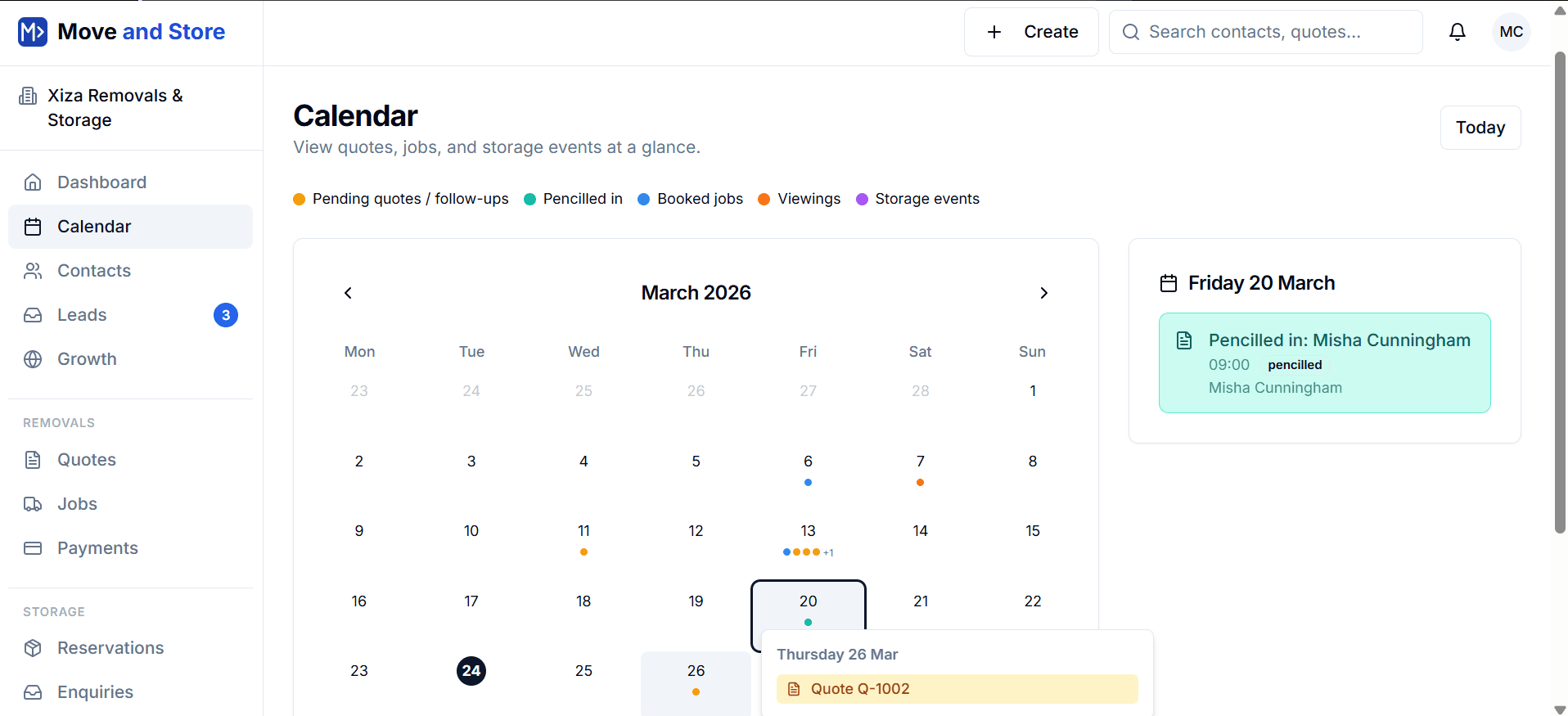
Calendar visibility keeps the week under control
The calendar shows quotes, jobs, viewings and storage events together, so operators can spot clashes, gaps and follow-up moments before the day runs away from them.
Lead management stays visible while the enquiry is warm
Operators can see which leads need first contact, which ones are due a chase, and which quotes are already moving towards a booking instead of digging through inboxes.
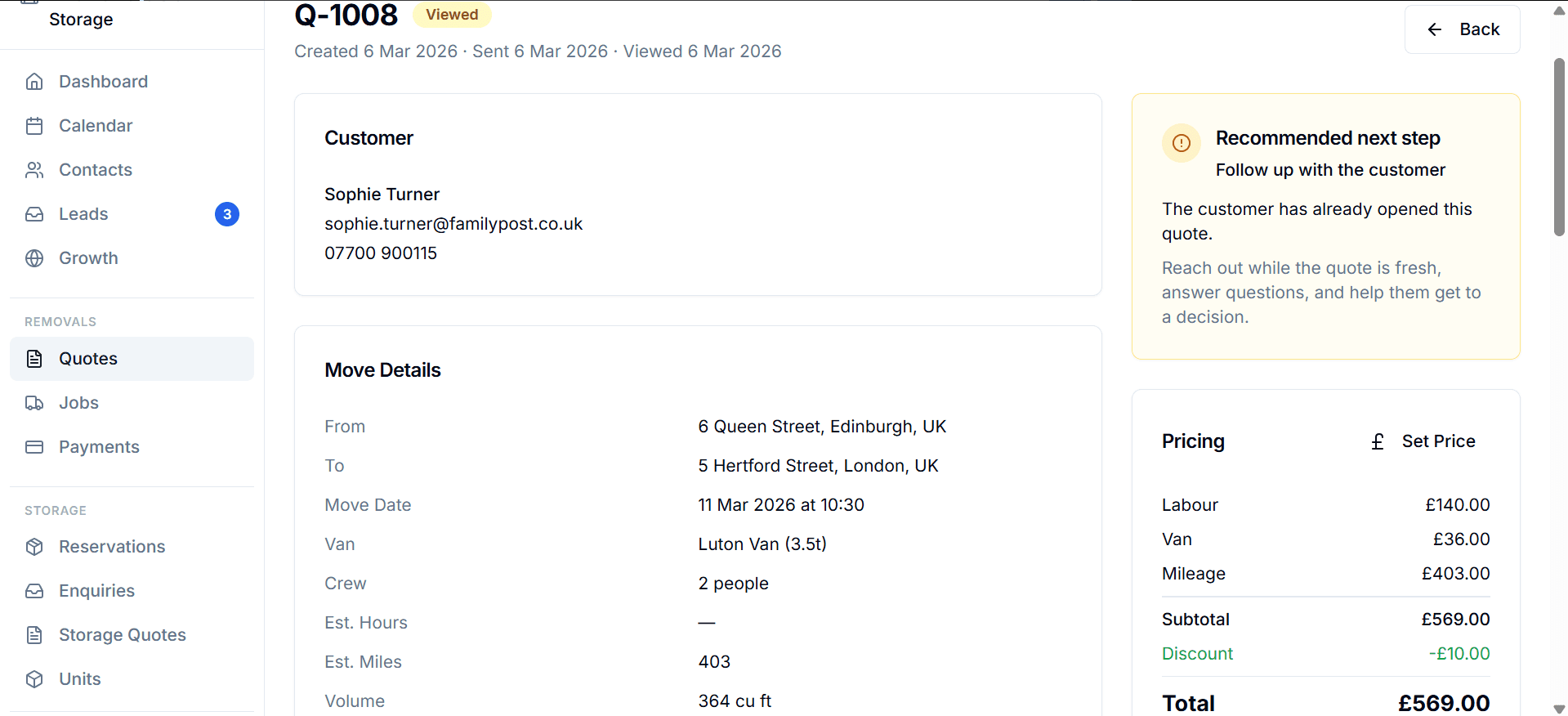
Quote detail keeps the commercial context intact
When the quote sits inside the same workflow, the team can still see who the customer is, what was priced, and what should happen next without jumping between tools.
If follow-up is where the work leaks, Pro fixes the weak point for £29/month.
Move and Store Pro keeps leads, quotes, reminders, and bookings in one joined-up workflow so promising enquiries do not go cold between tools.
Lead sources
Track every lead from first click to finished job
Leads can come in from Google Ads when operators sign up to the Get the Phones Ringing package, but they can also arrive from phone calls, website forms, Messenger, or word of mouth. Whatever the source, every lead is tracked through stages, and Move and Store suggests helpful next steps: schedule a viewing, send a quote, follow up, or mark as lost.
Remote and in-person viewings
Schedule viewings from the lead record and send invitations that customers can accept, so the surveyor knows exactly where to be and when.
Stage-based pipeline view
See at a glance which leads are new, which have been quoted, which are warming up, and which need a chase before they go cold.
Automated follow-ups that do not depend on memory
On the Pro plan and above, the CRM can send follow-up nudges automatically when a quote has not been viewed or a deposit has not been paid. Operators can turn automation off on a lead-by-lead basis if they prefer to handle certain customers personally.
Even on the Free plan, follow-ups are never invisible. Operators can schedule manual follow-ups that appear as reminders, so the business still has a safety net against leads going cold.
Why this matters commercially
Most removals companies lose work not because the quote was wrong, but because nobody chased it. Automated follow-up closes that gap without adding admin overhead.
Turn finished jobs into reviews automatically
When a customer has paid via the quote form and the job is complete, the CRM can automatically send a review request. Because it already knows who the customer is and what they paid for, the request arrives at the right moment: while the experience is still fresh.
Operators do not need to remember to ask, and the customer does not need to be chased separately. Reviews feed Google reputation, which is the single biggest driver of local removals enquiries.
New module
Storage: just out of Beta and included with every plan
The Storage module has just come out of Beta testing and is available to all Move and Store accounts. For a limited time, the module is included with every plan at no additional charge. Operators who sign up to a paid plan during this window will retain Storage when it becomes a separately billed add-on in the future.
Manage container inventory
Track which containers are occupied, which are available, and what each customer has stored so the warehouse stays organised.
Linked to the CRM and job workflow
Storage is not a separate system. It connects to the customer record, so the business can see removal, storage and retrieval as one continuous job lifecycle.
How CRM connects to quoting and payment
The CRM becomes commercially useful when it is not isolated from the rest of the workflow. Lead status, quote status and payment progress need to sit in one joined-up system.
Who this is best for
- Owner-led removals firms that are handling enquiries across too many channels and starting to lose track.
- Smaller teams that need a better follow-up system without buying a bloated sales CRM built for enterprise software companies.
- Operators who want quoting, deposits and job handover to feel like one joined-up workflow rather than separate admin tasks.
Long read? Send it to yourself to finish later.
Free access, no card required.
Pro is £29/month. Stronger follow-up without a bloated CRM stack.
Automations, review requests, and better lead visibility, with the rest of the removals workflow already connected.
Frequently asked questions
Why do removals companies need a CRM?
Because a lot of work is lost in the gap between enquiry, quote, follow-up and booking. A CRM keeps that process visible so leads do not rely on memory or inboxes.
Can the CRM track quotes and follow-up?
Yes. Move and Store keeps quote status, follow-up visibility and customer history tied together so the operator can see which leads need attention.
Is this suitable for smaller removals firms?
Yes. The CRM is designed for smaller UK removals operators who need structure and visibility without an overbuilt enterprise setup.
What happens after the lead becomes a booking?
The lead can continue into quote, payment, job and review workflows, so the team keeps one joined-up operational record instead of restarting in another tool.
Ready to stop losing track of promising leads?
Ready to stop losing track of promising leads?
Start Pro if you want stronger follow-up and clearer lead visibility now, or start free and test the CRM workflow yourself before upgrading.